Officers get paid a lot less than analysts but their pay is increasing
This is part four of a several part series analysing four years of data vacancy data in nonprofits.
Part one gives an overview and explains a bit more about the dataset.
Officers
This is a job family that covers roles that have a technical focus but at a lower level than Analysts. It includes jobs such as “Data Officer, Data Selections Officer and Data Co-ordinator”.
How much officers get paid
Analyst roles had median salaries of £31,565 in 2026. This was up from £27,644 in 2022.
This increase is striking when compared to Analyst roles which were largely flat across the same time period.
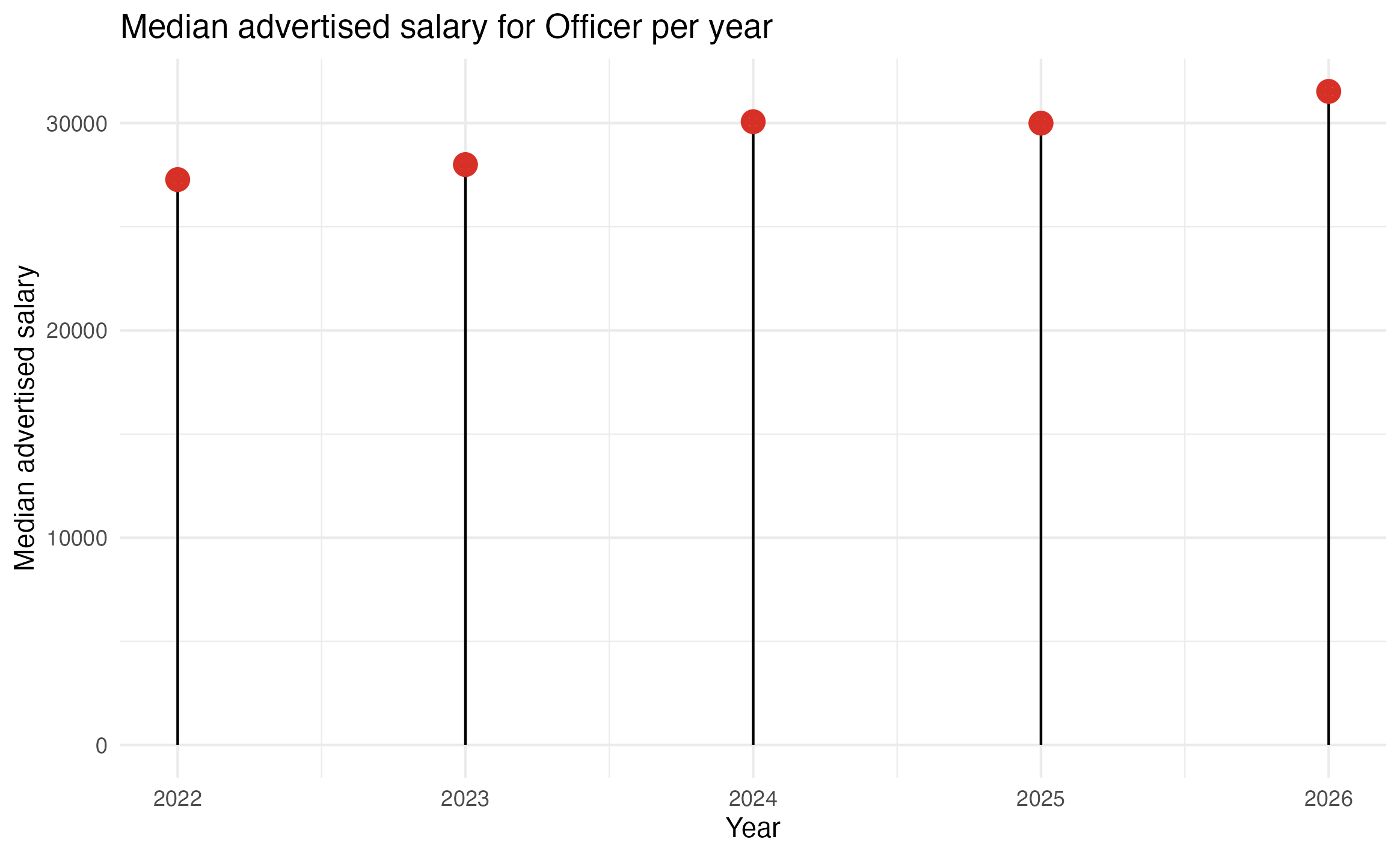
Averages are all very well but what you really want to know is whether you are competitive in the market. That’s what these dumbell charts try to help you with.
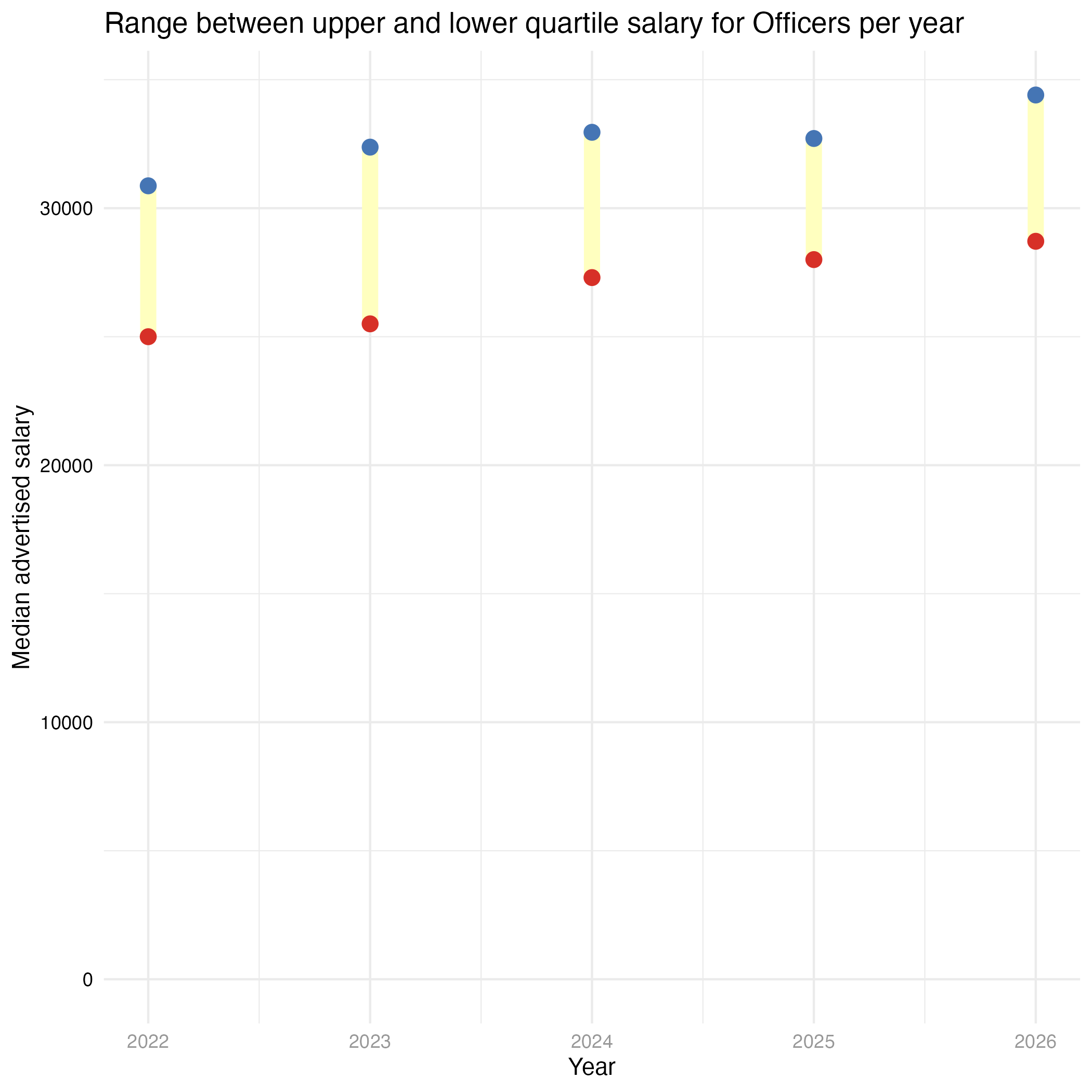
If your salary is between the dots then you're in the same range as 50% of officers. If your salary is lower than the lower dot you're in the range where only 25% of officers get paid this little. If your salary is higher than the high dot, you're in the range where only 25% of analysts get paid this much.
So in 2026 the range is from £28,712 to £34,404. Which only barely overlaps with analyst roles (the range there between £33K and £42K). I think it’s worth asking yourself whether you need an analyst given the premium you’ll be paying over an officer.
These roles include London weighting where that is relevant.
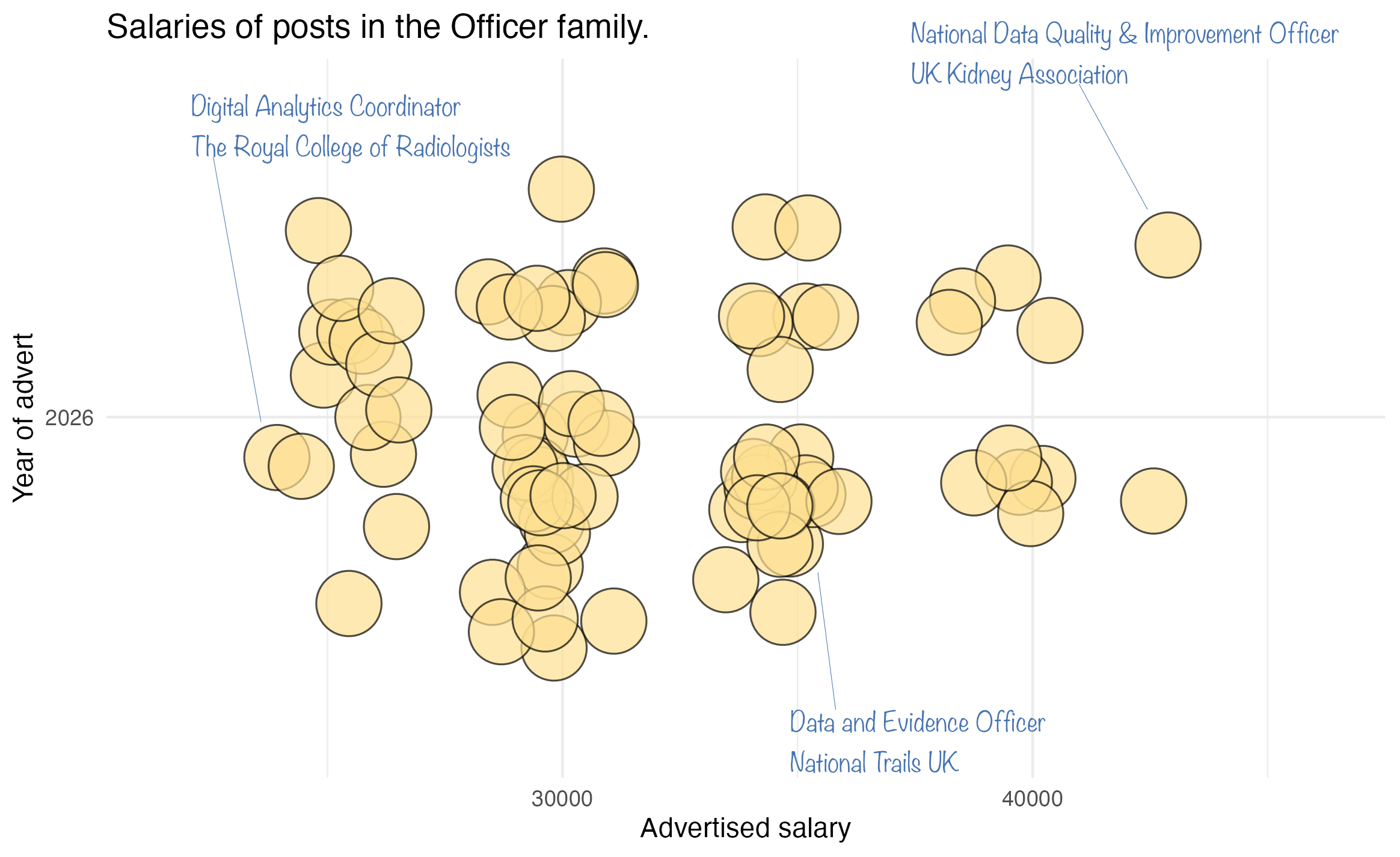
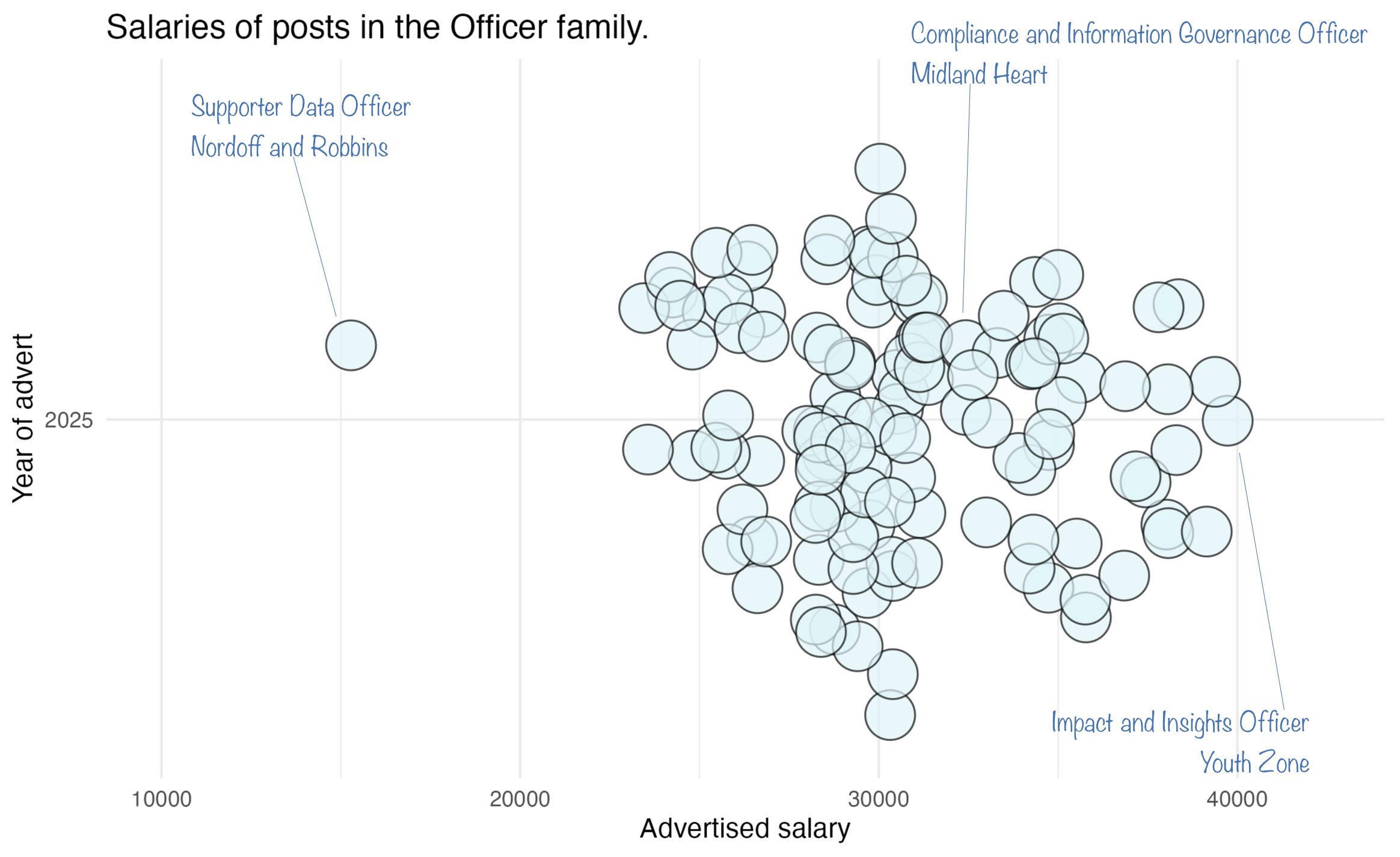
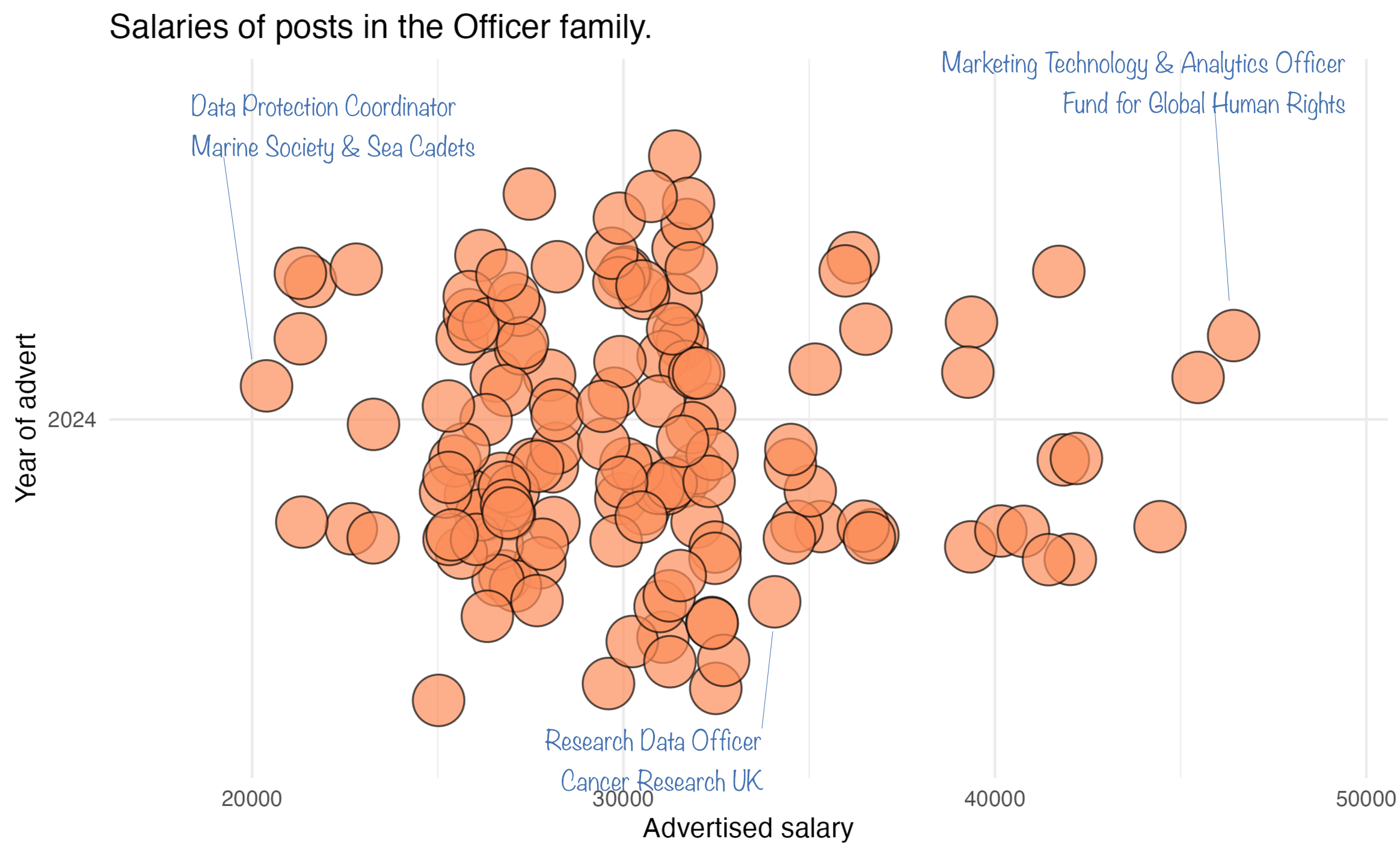
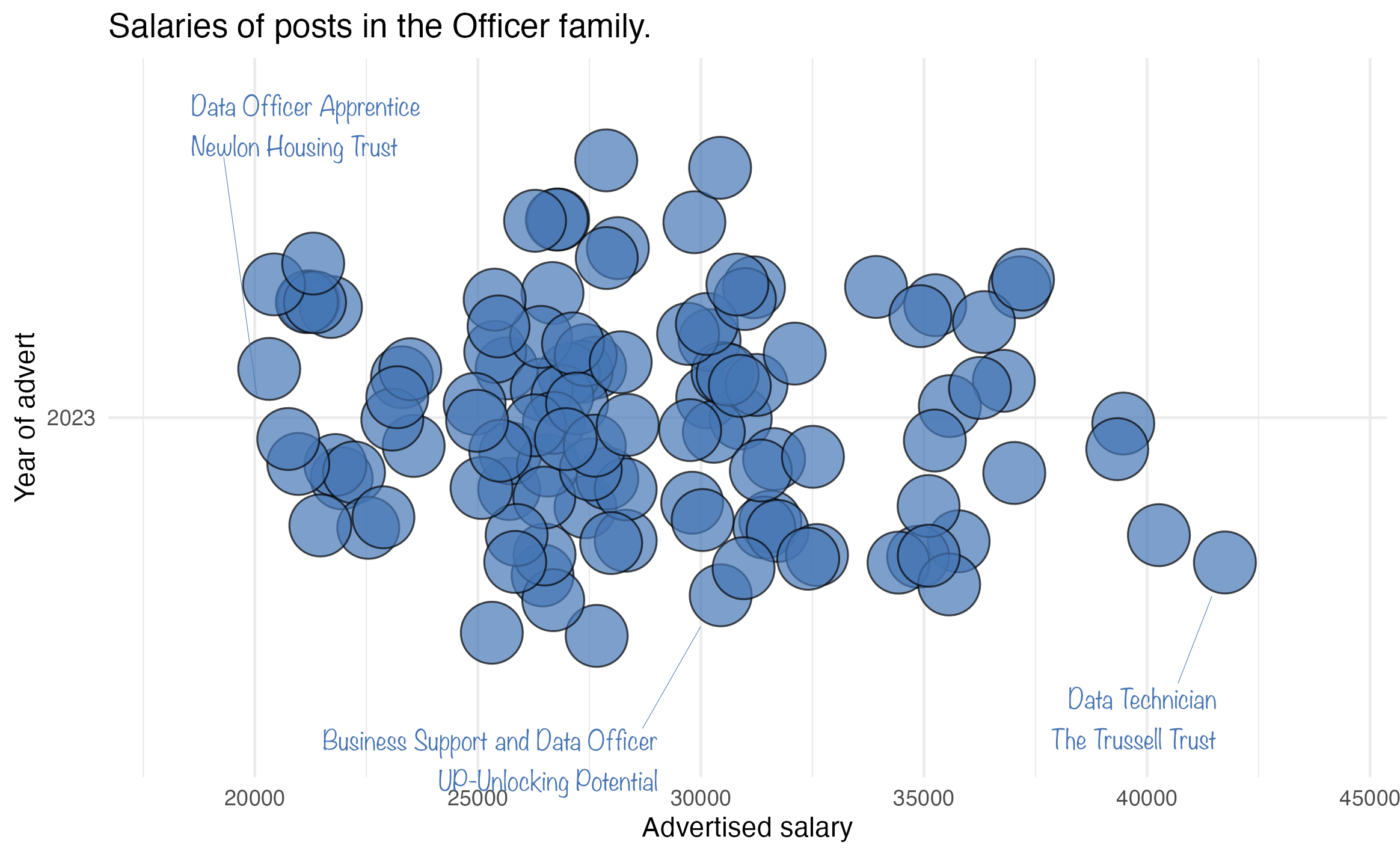
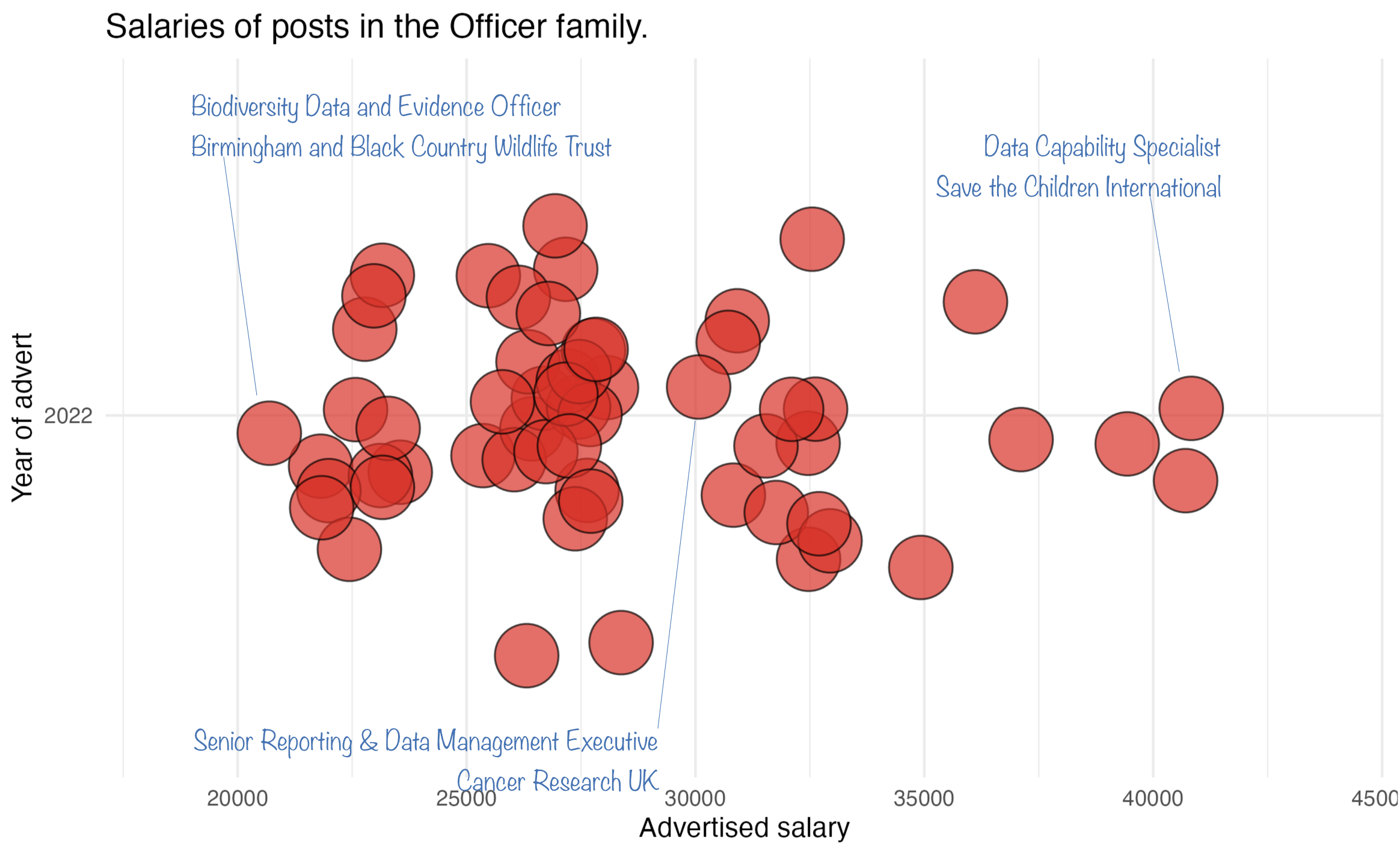
I find it really helpful to look at the spread of all salaries. These charts have a dot for each vacancy. I’ve annotated a few so you can see what sort of roles we’re talking about here.
I’ve drawn one chart for each calendar year.
2026
2025
2024
2023
2022
Analysts overall
This is a really interesting job family to me. I suspect that there are organisations who only need a data officer rather than a data analyst and the data suggests they will be paying less for that role.
But are there organisations who would get the value from an analyst who are only recruiting to officer roles?
I’d love to hear from employers and from people in data officer roles.
